
Roof repair signs are almost always visible months before a roof actually leaks, and almost always from the ground or from inside the house. Gold Coast storm season runs from roughly November to March, and the roofs that fail during it are rarely roofs that were fine in October. They are roofs that were showing something and nobody was looking. This is what to look for, and when.
Roof Repair Signs You Can See From Inside
Start indoors, because the interior tells you more than the roof surface does and you do not need a ladder for it.
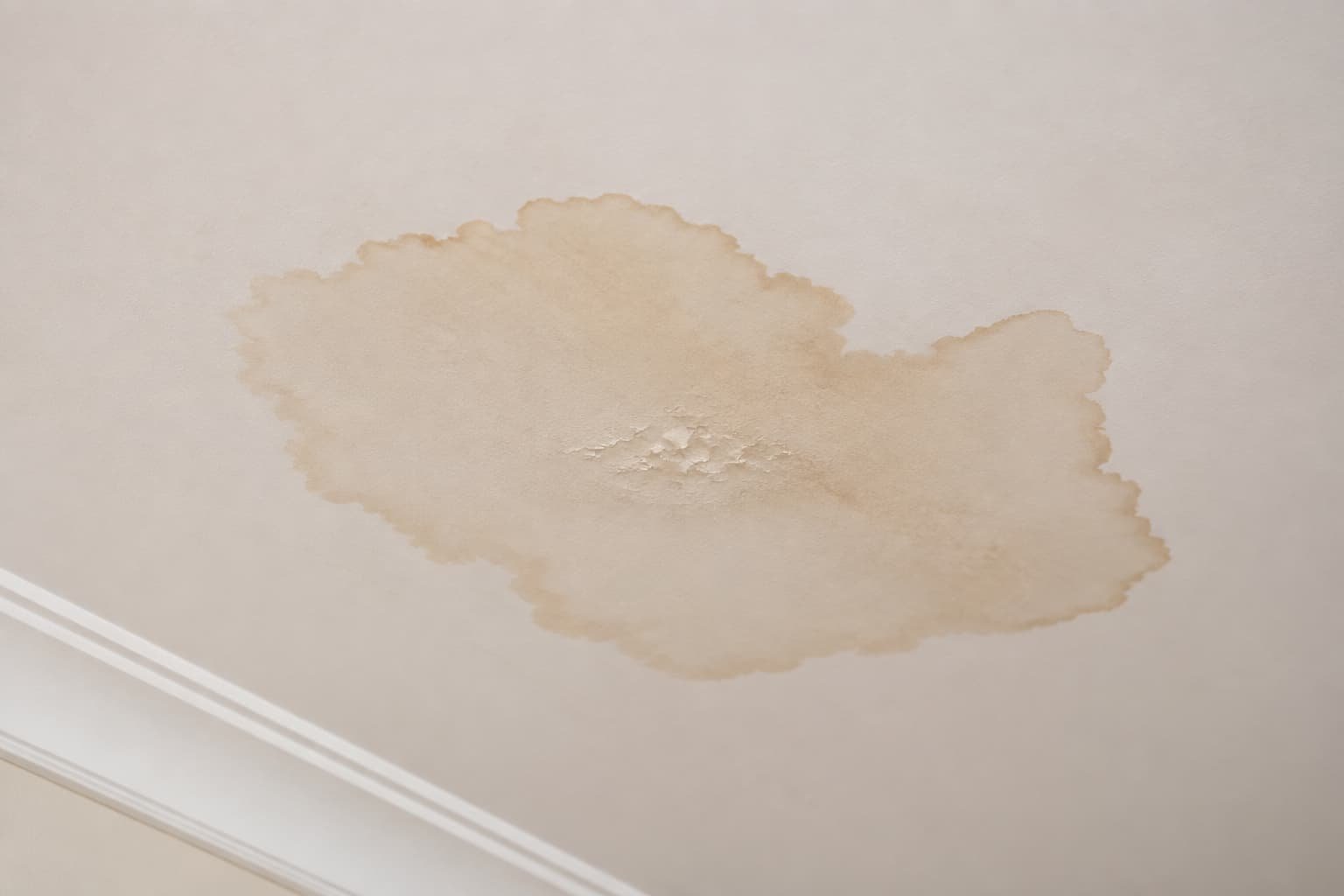
- Ceiling stains. A brown or tea-coloured mark, usually with a darker ring at its outer edge. The ring is the tide line from repeated wetting and drying, and it means this is not the first time.
- Blistered or flaking paint. On ceilings and on the top of internal walls, where moisture has got behind the paint film.
- A musty smell in a room that has no obvious damp. Frequently the first sign of water sitting in insulation above the ceiling.
- Sagging in the ceiling sheet. Wet plasterboard loses strength. Sagging means water has been there long enough to matter, and it can eventually come down.
- Daylight visible in the roof cavity. If you can safely see into the roof space from a manhole, light coming through is a direct opening.
- Rust marks on nail plates or metal fixings in the cavity. These show where water has been running even when the timber has since dried.
Roof Repair Signs You Can See From the Ground
Walk the perimeter of the house and look up. Binoculars help more than a ladder does, and they are considerably safer.
- Ridge capping that is no longer straight. A dip, a lift at one end, or visible gaps in the mortar line all mean bedding has failed.
- Mortar debris in gutters or on the ground. Crumbled pointing washes down. Finding it below a ridge line tells you what is happening above it.
- Displaced, slipped or obviously cracked tiles. Particularly along ridges and at the verges, which are where wind lifts first.
- Dark patches or heavy lichen growth. On concrete tile this indicates the surface coating has worn through and the tile is holding water rather than shedding it.
- Rust streaks running down sheeting or fascia. Usually starting at a fixing or a lap, and a reliable sign the metal components are going.
- Sagging gutters, or gutters holding water after rain. Falls have gone or brackets have pulled loose, and standing water corrodes the base.
- Vegetation growing in a valley or gutter. If something is growing there, the debris has been wet for a long time.
Signs Specific to Metal Roofs
Metal roofs give different warnings, and most of them are at the fixings rather than in the sheeting.
Look for screw heads that have gone rusty, or where the rubber washer beneath them has visibly cracked, hardened or squeezed out. On a roof of ten to fifteen years old in this climate, that is expected wear rather than a fault, and it is the single most common cause of leaks in the newer estates. Also check where flashings meet walls, and around anything that penetrates the roof — solar mounts, vents, whirlybirds and skylights. Sealant has a finite life, and penetrations leak long before the roof around them does.
The Pre-Season Check
The right time for this is late winter or early spring, before the first cells arrive and before every roofer in the city is booked out. Working through it takes an afternoon.
- Clear gutters and valleys, or have them cleared. This is the highest-value single job before storm season.
- Check downpipes actually run clear, not just that the gutters look empty.
- Walk the perimeter with binoculars and check every ridge and hip line.
- Look into the roof cavity from the manhole with a torch, on a dry day and again during rain if you can.
- Cut back branches overhanging the roof.
- Have anything you found looked at while there is still time to book it.
Warnings and preparation advice through the season are published by the State Emergency Service, and their number is the one to call for immediate assistance during a severe event.
Do Not Get on the Roof
This matters more than any of the above. Falls from height cause serious injuries every year in Queensland, and residential roofs are worse than they look — tiles crack under a misplaced foot, older sheeting can give way without warning, and anything damp is dangerously slippery. Terracotta in particular breaks under weight placed anywhere other than directly over a batten.
Everything on the checklist above can be done from the ground, from a manhole, or by someone who is set up to work at height properly. Walking your own roof to check for damage is how a small repair becomes a hospital visit.
What These Roof Repair Signs Usually Turn Out to Be
Ceiling stains most often trace back to a failed flashing, a cracked tile or a blocked valley rather than to the roof material itself. Moved capping means bedding has failed and generally points to restoration and repointing. Rust streaks and failing screw heads are metal and Colorbond repairs. Overflowing or sagging gutters are gutter and valley work. Cracked and slipped tiles are tile roof repairs.
If a storm has already been through and you are only now checking, that is storm damage repairs, and it is worth doing promptly. Hail damage frequently looks like nothing at all from the ground and only announces itself as a leak two or three cells later, by which time the connection to the original event is much harder to demonstrate to an insurer.
The Case for Looking Now
Roof repair signs are cheap to act on and expensive to ignore, and the gap between those two states is one wet season. A cracked tile costs a few hundred dollars. The same tile left through summer means a roofer, a plasterer, a painter, possibly an electrician, and a claim that may be declined as gradual damage.
Booking before November also means you are dealing with a roofer who has time to look properly, rather than one triaging emergency calls across the whole city.