Storm Damage Roof Repairs on the Gold Coast
Storm damage roof repairs start with one thing: stopping the water. Everything else, including the insurance claim and the permanent repair, is easier once the roof is watertight. If a storm has just been through and your ceiling is wet, the priority is a make-safe today, not a perfect quote next week.
What Gold Coast Storms Do to Roofs
The south-east Queensland storm season runs from roughly November through March, and the damage follows a predictable pattern. Severe cells build over the hinterland during the afternoon and track east towards the coast, arriving with a burst of very high rainfall intensity, damaging wind gusts and, often enough, hail.
Wind lifts. It gets under the leading edge of ridge capping, under flashings and under the ends of sheeting, and it works them loose. On tiled roofs it displaces tiles along the ridge and at the verges first, and a single dislodged tile leaves an open path straight through to the sarking or, on older homes without sarking, straight into the roof cavity.
Hail cracks. Concrete and terracotta tiles fracture under impact, sometimes visibly and sometimes as hairline cracks that only leak once they have been through a few more thermal cycles. Metal roofs dent rather than crack, which looks cosmetic but can distort sheet profiles enough to break the water seal at laps and fixings.
Rain intensity overwhelms. Valleys, box gutters and downpipes sized for ordinary conditions simply cannot shift the volume a severe cell delivers, so water backs up above the flashing line and enters over the top rather than through any defect at all. This is one of the most common storm leaks we see, and it is also the one most often misdiagnosed as roof failure.
Emergency Make Safe
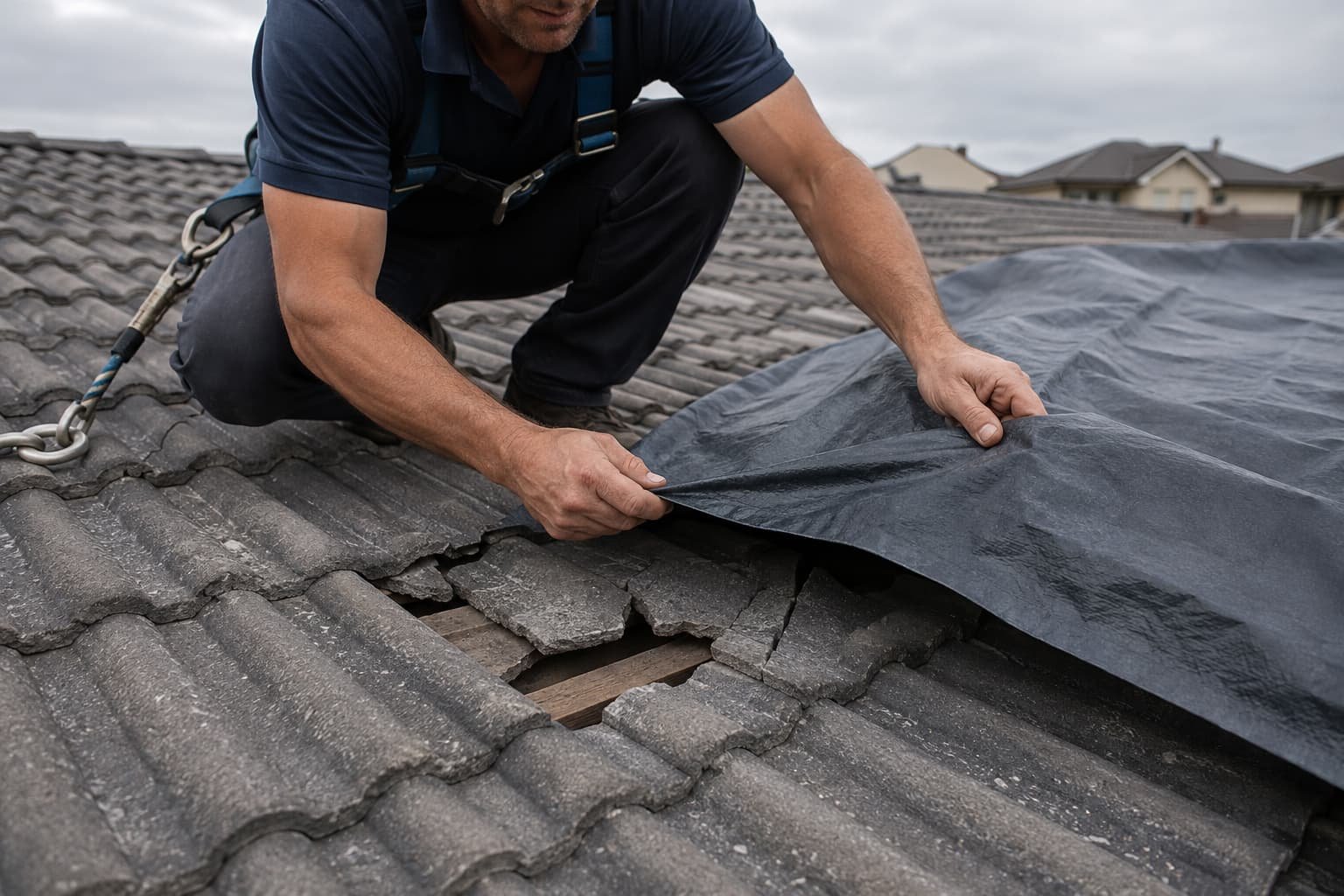
Our first attendance is about containment. We tarp and secure the affected area, clear blocked valleys and gutters that are causing overflow, remove anything loose that could come off in the next gust, and take the photographic record you will need later.
That record matters more than most homeowners realise. Insurers assess what they can see, and damage that has been tidied up or repaired before it was documented is difficult to substantiate afterwards. We photograph the damage in place, before we touch it, and again after the make-safe.
Permanent Repairs
Once the roof is stable and the weather allows, the permanent work is scoped properly. Depending on what the storm did, that can mean replacing cracked and displaced tiles, re-bedding and repointing ridge capping that has lifted, replacing lengths of valley iron, renewing flashings and fasteners, or replacing damaged sheeting.
We scope the whole roof rather than the obvious damage. A cell that cracked six tiles on the northern face has almost certainly stressed the rest, and finding the marginal damage now is considerably cheaper than finding it in February when the next system arrives.
What Storm Damage Roof Repairs Cost
Indicative and inclusive of GST. Storm work varies more than any other repair we do, because the scope is set by the weather rather than by a plan.
- Emergency make-safe and tarping: $400 to $900, depending on the area to be covered and access.
- Replacing displaced or cracked tiles: $350 to $1,200 for a localised area.
- Ridge capping re-bed and repoint after wind lift: $1,800 to $4,500 for an average single-storey home.
- Valley iron replacement: $1,200 to $3,500 per valley.
- Flashing renewal: $400 to $1,500 depending on length and junction type.
- Sheet replacement on metal roofs: $900 to $3,000 for a patch area, more where profiles are discontinued and matching is difficult.
- Written damage report for insurance: included with any repair we carry out.
Frequently Asked Questions
How fast can you get here after a storm?
Make-safe calls take priority over scheduled work during storm season. Volume after a severe cell is genuinely heavy across the whole coast, so we triage by severity: active water entry into a living space comes first.
Should I get on the roof myself to put a tarp down?
No. Wet tiles and storm-damaged sheeting are the two most dangerous surfaces on a residential roof, and falls from height cause serious injuries every season here. Contain what you can from inside with buckets and move contents clear.
Will my insurer cover storm damage?
Sudden storm damage is usually covered where the roof was in reasonable condition beforehand. Claims are commonly reduced or declined on the basis of pre-existing deterioration, which is why documentation of the damage matters so much.
Do I need to lodge the claim before the make-safe?
No. Policies generally allow, and expect, reasonable action to prevent further damage. Keep the invoice and the photographs, and lodge as soon as practical afterwards.
What if the damage looks minor?
Have it looked at anyway. Hairline tile cracks and slightly lifted capping are the defects that produce leaks two or three storms later, once the damage has opened up. They are inexpensive to fix now and considerably less so after water has been through a ceiling.
Where can I check severe weather warnings?
Current warnings and preparation advice for Queensland are published by the State Emergency Service, which is also the number to call for immediate life-threatening emergencies during a storm.
Storm Damage Roof Repairs Across the Gold Coast
We attend the full coast and the hinterland fringe, including Southport, Nerang, Burleigh Heads, Mudgeeraba, Robina and Upper Coomera. Inland suburbs generally see the more severe hail, while the coastal strip takes the stronger wind off the water, so the damage pattern differs across the city even within a single storm.
Storm work often overlaps with everything else on a roof. Once the immediate damage is dealt with, we will tell you whether you also need roof leak repairs, tile roof repairs, metal and Colorbond repairs, work on gutters and valleys that could not cope with the volume, or full restoration and repointing where the roof was already near the end of its serviceable life.