
Roof insurance claim outcomes on the Gold Coast usually come down to one question: was the damage sudden, or had it been developing for years? Insurers cover the first and generally decline the second, and the difference between the two is often a matter of what you can demonstrate rather than what actually happened. This is a general guide to how these claims work and what makes them go smoothly. It is not advice on any particular policy, and your product disclosure statement governs what you are actually covered for.
What Is Usually Covered
Sudden, identifiable damage from a defined event is the core of it. Storm and hail damage, wind lifting capping or sheeting, impact from a falling branch, and water entering as a direct result of that damage all sit inside what a standard home policy is designed to respond to.
Resulting internal damage generally follows the roof damage. Where a storm opened up the roof and water then ruined ceilings, insulation, carpet or contents, that consequential damage is usually part of the same claim.
What Is Usually Not
Gradual deterioration is the big exclusion, and it covers more than homeowners expect. Rust, perished sealant, failed bedding and pointing, corroded fixings and worn-out valley irons are all treated as wear and tear. So is damage that follows from a lack of maintenance, which is where blocked gutters and valleys most often cause a problem — if water backed up because the gutters had not been cleared in three years, the insurer may take the view that the overflow was foreseeable.
Pre-existing defects are the third category. If a roof was already at the end of its life before the storm, an insurer may accept the storm damage while declining the underlying condition, and you can end up with a partial settlement rather than a new roof.
Why a Roof Insurance Claim Gets Declined
In our experience on the coast, three things cause most of the trouble.
The first is no evidence of the damage in its original state. Once a roof has been repaired or tidied up, an assessor is looking at your description rather than the event. Photograph everything before anything is touched, including from inside.
The second is a maintenance history that cannot be shown. Receipts for gutter cleaning, previous repairs and inspections are worth keeping, because they are the direct answer to a wear-and-tear argument.
The third is a roof that was genuinely in poor condition. No amount of documentation changes that, and it is one of the reasons that dealing with visible deterioration before storm season is worth doing on its own terms.
Make Safe First
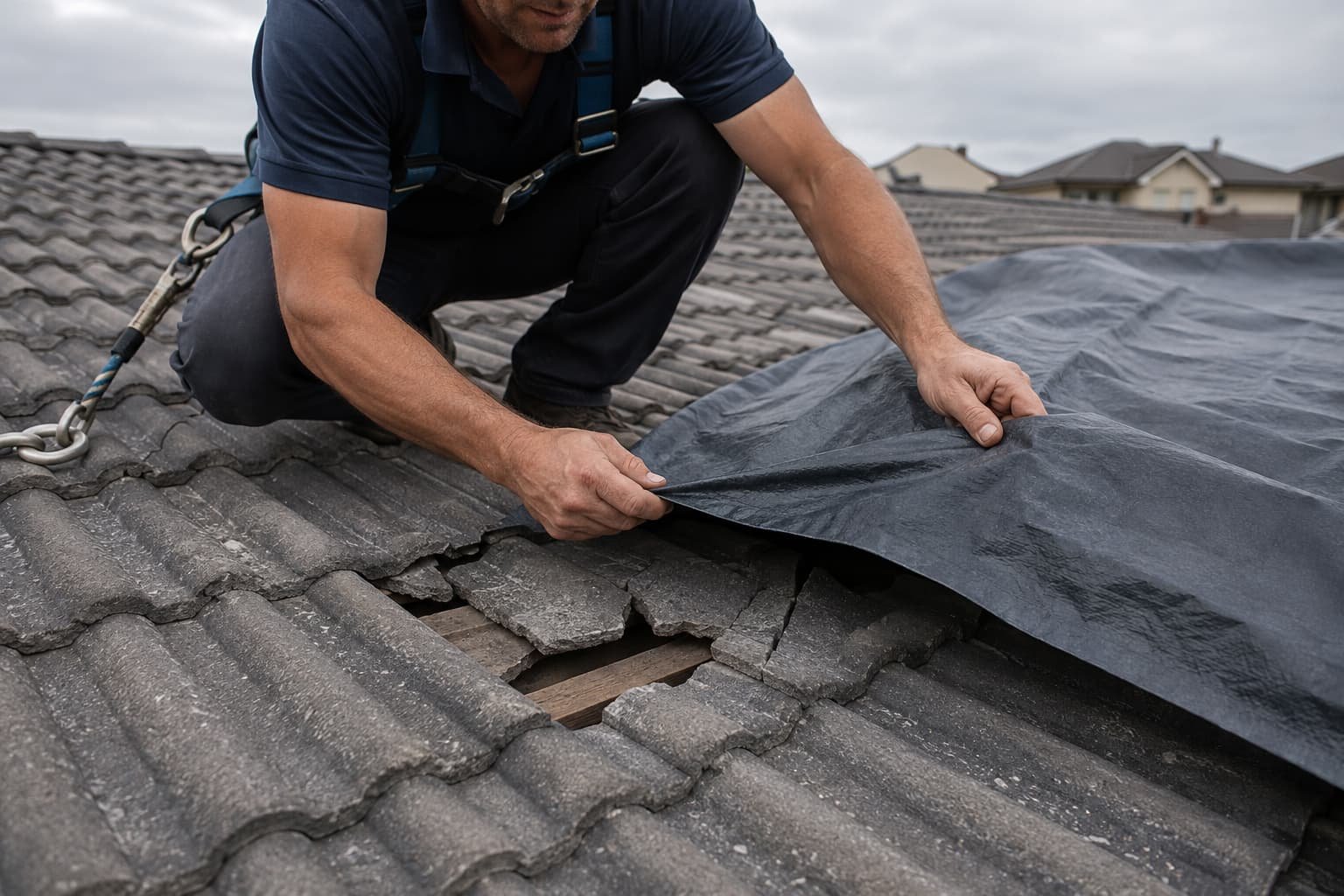
Policies generally allow, and expect, reasonable steps to prevent further damage. You are not usually required to wait for an assessor before stopping water entering the house, and doing nothing while a ceiling fills up can itself create problems with the claim.
Keep the make-safe invoice separate and itemised, photograph the damage before the tarp goes on and again after, and lodge the claim as soon as practical. If you are unsure, ring the insurer and ask before committing to anything beyond containment.
Getting Your Own Report
An insurer assesses a roof insurance claim on the evidence in front of it, and that evidence does not have to come only from their assessor.
The insurer will typically send an assessor. You are entitled to obtain your own report from a licensed roofer as well, and on any claim of size it is worth doing.
A useful report describes what failed, why it failed, and why the failure is consistent with a sudden event rather than gradual deterioration — hail impact fractures look different to age cracking, and wind lift at a verge looks different to bedding that has crumbled over fifteen years. It should be supported by photographs and identify the licence under which it was prepared.
Cash Settlement or Repair
Insurers may offer to have the work done through their own network or to settle in cash. Both have trade-offs. A managed repair usually carries a workmanship guarantee through the insurer. A cash settlement gives you control over who does the work and lets you put it toward a better outcome, but the figure is what it is, and if the scope was assessed conservatively you carry the shortfall.
Read the scope attached to any settlement offer carefully. A number without a scope tells you nothing about whether it is enough.
Excess Is Worth Checking First
On smaller repairs the excess can approach or exceed the cost of the job. Paying directly in that situation is usually cheaper and keeps your claims history clean, which matters at renewal. Compare the excess against a written quote before you decide to lodge anything.
If a Roof Insurance Claim Is Declined
A decline is not the end of it. Every insurer operates an internal dispute resolution process, and asking for the decision to be reviewed in writing — with your own roofer’s report attached — resolves a meaningful proportion of disputes.
If internal review does not resolve it, general insurance disputes can be taken to the Australian Financial Complaints Authority, which is free for consumers and independent of the insurer.
Practical Steps After a Storm
Everything that makes a roof insurance claim straightforward happens in the first forty-eight hours, before anyone has repaired anything.
- Photograph everything before touching anything, inside and out.
- Contain the water and arrange a make-safe. Do not climb onto the roof yourself.
- Keep every invoice, itemised and separate.
- Lodge the claim promptly and note the claim number.
- Get an independent report from a licensed roofer for anything substantial.
- Check the excess against a written quote before deciding to proceed.
- Keep the damaged materials if you can — removed tiles or sheeting are evidence.
Where We Fit
We attend storm damage repairs across the Gold Coast and provide a written, photographed report with any repair we carry out, which you can lodge with your insurer whether or not we do the permanent work. Where the damage turns out to be gradual rather than sudden, we will tell you that too — it is better to know before you lodge than after.
If a claim has already been declined on wear-and-tear grounds and the underlying issue is failed bedding, corroded metal or worn valleys, the practical question becomes restoration or targeted leak repairs rather than a dispute worth pursuing.