Roof repair vs replacement is the decision most Gold Coast homeowners face exactly once, usually under pressure, and usually while holding a quote from someone with an interest in the answer. The honest position is that most roofs brought to us do not need replacing. But some genuinely do, and continuing to patch those is the more expensive mistake. Here is how to tell which one you are looking at.
The Three Questions That Decide It
Everything else is detail. These three settle most cases.
Is the damage isolated or spread?
One leak in one location, one failed valley, one section of capping — that is a repair, regardless of how old the roof is. Defects appearing in three or four unrelated places within a season or two mean the roof has reached the end of a maintenance cycle, and you are now paying repeatedly for the same underlying condition.
Is the substrate sound?
This is the question that actually matters and the one you cannot answer from the ground. Battens, rafters and sarking are what the roof covering sits on. If battens have rotted where water has been getting in, or the frame has moved, no amount of work on the surface fixes it. A roofer who has not been into the cavity cannot tell you.
How much serviceable life is left in the material?
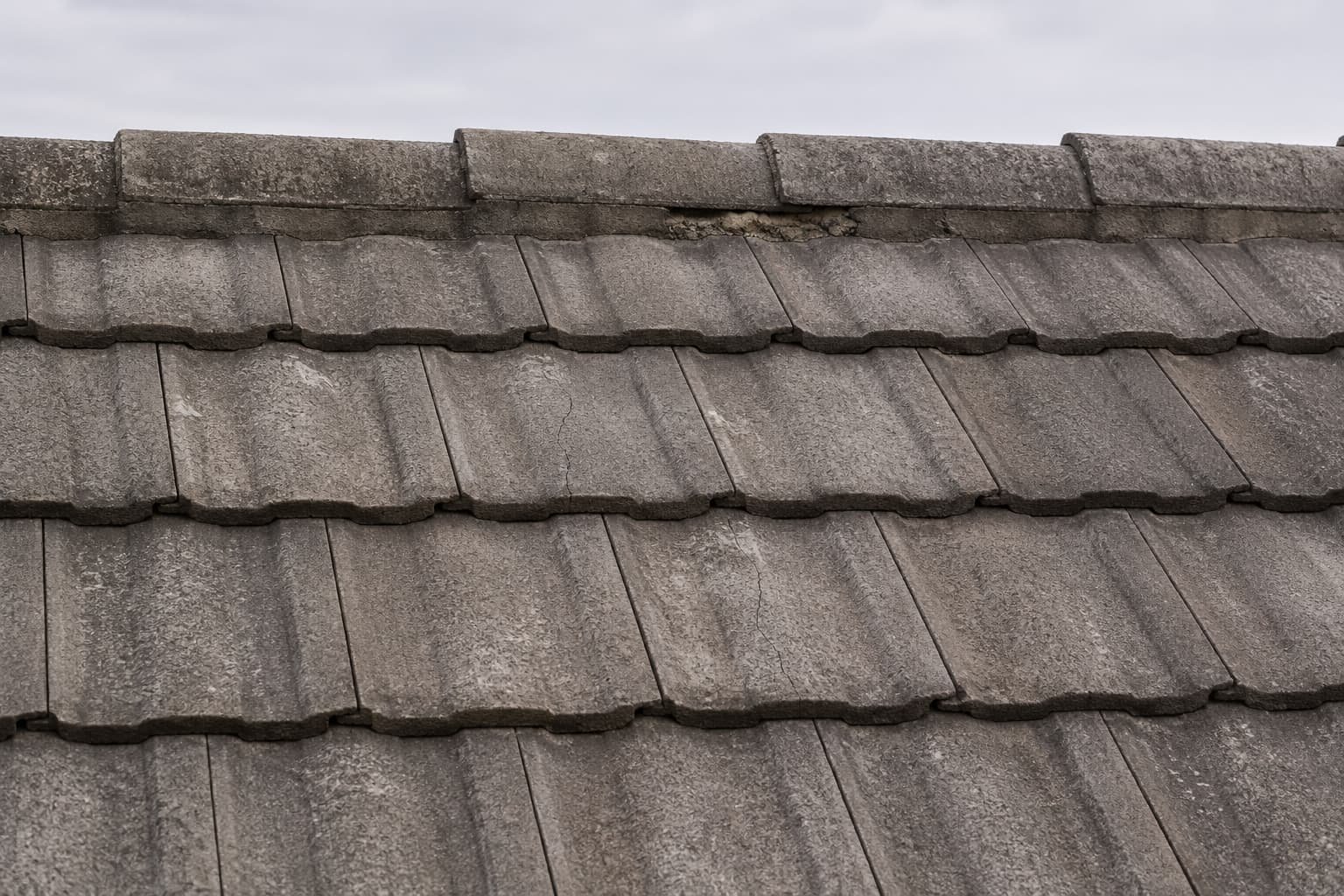
Concrete tile loses its surface coating after twenty to thirty years and starts absorbing water. Terracotta can outlast the house but becomes brittle. Metal fails at fixings and flashings long before the sheeting goes, unless corrosion has perforated it in several places. The material tells you how many more years a repair would be protecting.
The Middle Option Most People Miss
Roof repair vs replacement is usually presented as two choices when there are three. Restoration sits between them and is the right answer more often than either.
A restoration takes a structurally sound roof with widespread surface-level problems — failed bedding, cracked pointing, worn coating, corroded metal components — and deals with all of it in one job. On concrete tile that runs roughly $4,500 to $9,000, against a replacement that starts well above it, and it typically buys another fifteen years.
The condition is that the substrate has to be sound. Restoration is not a way of avoiding a replacement that is genuinely needed; it is a way of avoiding one that is not.
When Replacement Is the Only Honest Answer
- Rotted or failing battens and framing. Structural, and nothing on the surface fixes it.
- Widespread tile fracture. Where a significant proportion of tiles have cracked, particularly on terracotta after a severe hail event.
- Metal perforated in multiple locations. Especially where rust is coming through from the underside, which means the coating has failed across the sheet rather than at a point.
- Repeated failures after competent repairs. If work has been done properly and the roof keeps failing elsewhere, the roof is telling you something.
- A roof at the end of a second maintenance cycle. Some roofs have simply had their two restorations and are done.
The Cost Comparison Nobody Runs Properly
Compare over time, not at the point of quote. A $900 repair every eighteen months for six years is $3,600 plus four disruptions, and at the end of it you still have the same roof, six years older. A $6,500 restoration over the same period costs more upfront and leaves you with a roof that is sound.
The reverse is also true. Replacing a roof that needed a $1,500 valley job is tens of thousands of dollars spent on a problem that did not exist. Both errors are common, and they come from the same place: making the decision on the roof’s appearance rather than its condition.
One Thing That Changes With Replacement
A repair maintains what is there. A full replacement is new building work, and it has to meet the requirements current at the time it is done rather than those that applied when the house was built. Depending on the property that can affect fixing specifications for the wind classification, sarking, insulation and safe access provisions, and it is part of why replacement quotes are higher than a simple materials-and-labour comparison suggests. The technical requirements sit with the Australian Building Codes Board.
This is not a reason to avoid replacement. It is a reason a replacement quote and a repair quote are not comparable line for line.
How to Avoid Being Upsold
- Ask what the substrate condition is. Anyone recommending replacement should be able to describe the battens and sarking, not just the tiles.
- Ask for photographs. A replacement recommendation without images of the underlying problem is a sales position, not a diagnosis.
- Ask what a repair would cost and how long it would last. A straight answer is a good sign. Refusal to quote a repair at all is not.
- Get a second opinion on any replacement quote. The numbers are large enough to justify the hour it takes.
- Be wary of free inspections that always find the same answer. If every roof in your street needs replacing, someone is running a script.
What This Looks Like on Gold Coast Roofs
In the estates through Robina and the newer northern suburbs, the answer is usually restoration or targeted repair — those roofs are young enough that the substrate is generally fine and the problem is bedding, pointing or fixings.
On the coastal strip, the split is different. Salt takes the metal components while the tiles remain sound, so the honest answer is frequently a substantial repair to the valleys, flashings and fixings rather than anything to the roof covering at all.
On older hinterland and inner-suburb stock, particularly unsarked pre-1980s housing, replacement comes into the conversation more often, because those roofs have both age and an absence of the secondary barrier that would have protected the substrate.
Where to Start
An inspection is the cheapest step and it converts the whole question from opinion into evidence. If the answer turns out to be targeted work, that is roof leak repairs, tile roof repairs, metal and Colorbond repairs or gutter and valley repairs. If it is the whole roof at surface level, it is restoration and repointing. If a recent event caused it, storm damage repairs may also be an insurance question rather than an out-of-pocket one.
Roof repair vs replacement should be decided by what is under the tiles, not by what a quote says on the front page.